
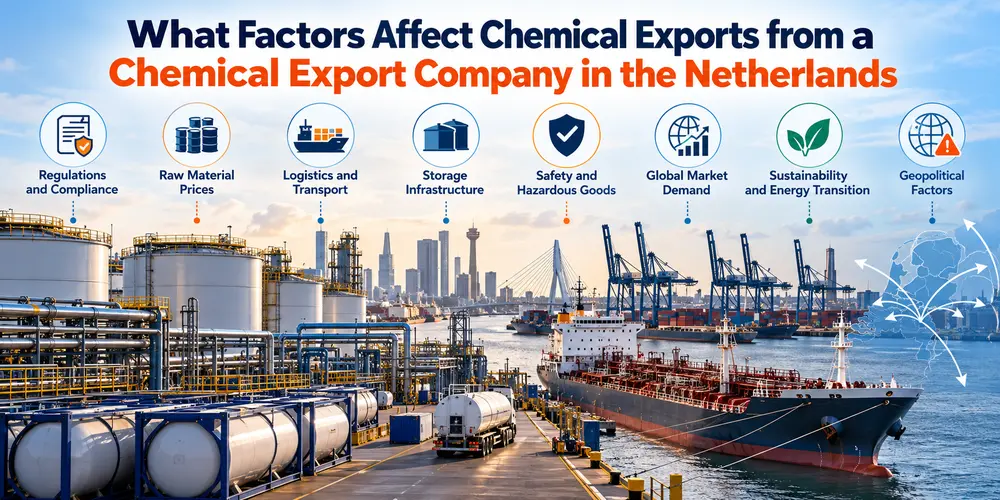
What Factors Affect Chemical Exports from a Chemical Export Company in the Netherlands?
The Netherlands has long kind of been seen as one of Europe's most important chemical trading hubs, connecting factories with the wider world markets via its ports, infrastructure and regulatory know-how. A Chemical Export Company in the Netherlands usually sits right in that overlap between logistics, compliance, and what the industry actually wants, so it matters a lot to understand the many moving parts that decide how smooth and profitable it is for chemicals to leave Dutch soil and reach buyers overseas.
1. Regulatory Compliance and Documentation
Chemical exports are among the most controlled areas of global trade, so yeah, not a casual field. Since the Netherlands is in the EU, exporters must follow REACH (Registration, Evaluation, Authorisation and Restriction of Chemicals), CLP (Classification, Labelling and Packaging), plus multiple international rules around hazardous substances. One delay, or a small documentation mistake like in safety data sheets, certificates of origin, export licenses, can get shipments stuck at customs, strain customer trust, and push up the total costs. Companies that keep compliance teams in place and keep regulatory knowledge refreshed tend to beat competitors who treat paperwork like it’s “just administrative”. No matter if a firm works as a Coating Chemical Supplier for Paints and Adhesives, or it supports multiple sectors, there are a bunch of linked issues that decide if exports really work.
2. Port Infrastructure and Logistics Network
The Port of Rotterdam, which is Europe’s biggest seaport, gives Dutch chemical exporters a practical logistics edge. Being near strong shipping routes plus rail and inland waterways can mean quicker turnaround and lower transport costs. Still, logistics flow is not automatic: container availability, port crowding, changes in fuel prices, and political disruptions that hit shipping lanes can shift delivery dates. Exporters that spread out their logistics partners and keep flexible shipping arrangements usually deal with these shocks better than firms depending on one single route or carrier. Also, beyond agriculture and food processing, the personal care and cosmetics side has grown into a major destination for specialty chemicals. A Personal Care Chemical Supplier in Netherlands has to keep up with changing formulas, clean-label expectations, and safety testing requirements, which then shapes what gets exported and where it can go. This sector growth basically shows how trends abroad can steer product development choices back in a Dutch exporting business.
3. Raw Material Availability and Pricing
Chemical manufacturing depends a lot on raw materials, and many of those raw inputs are imported too. When crude oil prices move, natural gas gets more or less expensive, or upstream supply chains run into trouble, the impact spreads into export pricing and shipping volumes. A company that also offers Technical Industry Services along with its main chemical lineup can sometimes handle turbulence better, because diversified income helps cushion swings tied to only one raw material category.
4. Demand from Key End-User Industries
Export volumes usually track the demand from end-use industries that consume the chemical products. In the Netherlands, the Agriculture Industry remains one of the biggest users of agrochemicals, fertilizers, and specialty compounds for crop protection and soil improvement. This is partly because the country is a global leader in agricultural exports even with its relatively small land area. When those sectors expand or shrink due to seasonal timing, shifts in trade policy, or changes in consumer behavior, export companies feel it directly in order quantities and the mix of products they sell.
5. Currency Exchange Rates and Economic Conditions
Most chemical exports are priced in euros or US dollars, so any currency swings pretty much have a say in how competitive things feel. If the euro gets stronger, Dutch chemical products can end up looking more expensive to overseas buyers, and then demand can soften a bit. On the other hand, if the euro weakens export volumes might go up, yet profit margins can get squeezed because those imported raw materials suddenly cost more. Then there are bigger economic conditions, like inflation, interest rates, and global trade tensions that can shape buyer confidence and purchasing power, so macro monitoring turns into a real, ongoing part of the export playbook, not just a background task. In the same way, the Food Processing Industry in Netherlands leans on food-grade chemicals, preservatives, and processing aids, and these inputs must meet strict safety requirements before they can be exported, or even used domestically in the first place.
6. Quality Control and Product Consistency
International buyers expect reliable quality batch after batch. If product purity varies, contamination risks appear, or packaging isn’t consistent, the supplier reputation can take a hit fast. Strong internal testing, third-party quality checks, and traceability systems help maintain the kind of confidence that long-term export relationships depend on. This is especially important for specialty use cases, like when supplying a Coating Chemical Supplier for Paints and Adhesives, because even small formulation inconsistencies can mess with the final end-product performance, then cause costly returns.
Why these factors matter for a chemical export company in Netherlands
Becoming successful as a chemical export company in Netherlands isn’t just about making high-quality chemicals. It also means you have to deal with regulatory maze stuff, logistics webs that can be surprisingly fragile, raw material markets that move day to day, currency shifts that nobody can fully predict, and the changing needs of end users in sectors like agriculture, food related processing, personal care, and even coatings. Companies that build some kind of resilience across all those areas tend to keep serving global markets in a reliable way, even when the economy gets shaky or geopolitics starts acting weird. If a business is looking for a trusted partner that really understands those dynamics up close, vandiemenchemicals.com provides strong know-how in specialty chemical supply, technical support, and export logistics, tailored for different industrial needs.
Frequently Asked Questions (FAQs)
1. What makes the Netherlands a strong base for chemical exports?
Its port infrastructure at world class level, easy EU trade access, and the solid regulatory framework make it one of Europe’s main chemical trade hubs, you know.
2. How do regulations like REACH affect chemical exporters?
REACH compliance is mostly unavoidable for chemicals sold within the EU or shipped from it. So registration has to be done properly, safety documents need to be ready, and classification should be sorted out before any shipment starts.
3. Which industries drive the most demand for Dutch chemical exports?
Agriculture, food processing, personal care, coatings, and adhesives are among the main end user industries that push export demand forward.
4. How does currency fluctuation impact chemical export pricing?
When the euro gets stronger, foreign buyers often see higher effective prices. When the euro is weaker, exports can feel more competitive, but it can also hit profits because imported raw materials might get more expensive, double edged if you’re not prepared.
5. Why is sustainability becoming important in chemical exports?
More buyers are now looking for lower carbon footprints and sustainable methods. So it’s not just a “nice to have” anymore, it’s a competitive factor.
6. What role does quality control play in export success?
Good quality control prevents costly returns and supports long term buyer confidence. That’s especially important for technical uses like coatings, adhesives, and similar applications where performance must stay consistent.
7. How do trade agreements affect export costs?
Many EU trade deals can reduce tariffs and make customs steps simpler. Still, in some destination countries, new trade barriers may appear, quietly at first, then all at once.
8. How can a company reduce risks in chemical exporting?
They can spread risk by working with different logistics partners, keep regulatory compliance teams organized and on top of changes, and monitor raw material markets continuously so disruptions are less likely to catch them off guard, or at least easier to manage when they do.
